
Gardens
NEW FOR 2012 - GUIDED TOURS OF THE GARDENS.
Please look in the Tours page of this section for more information.
THE WALLED GARDENS
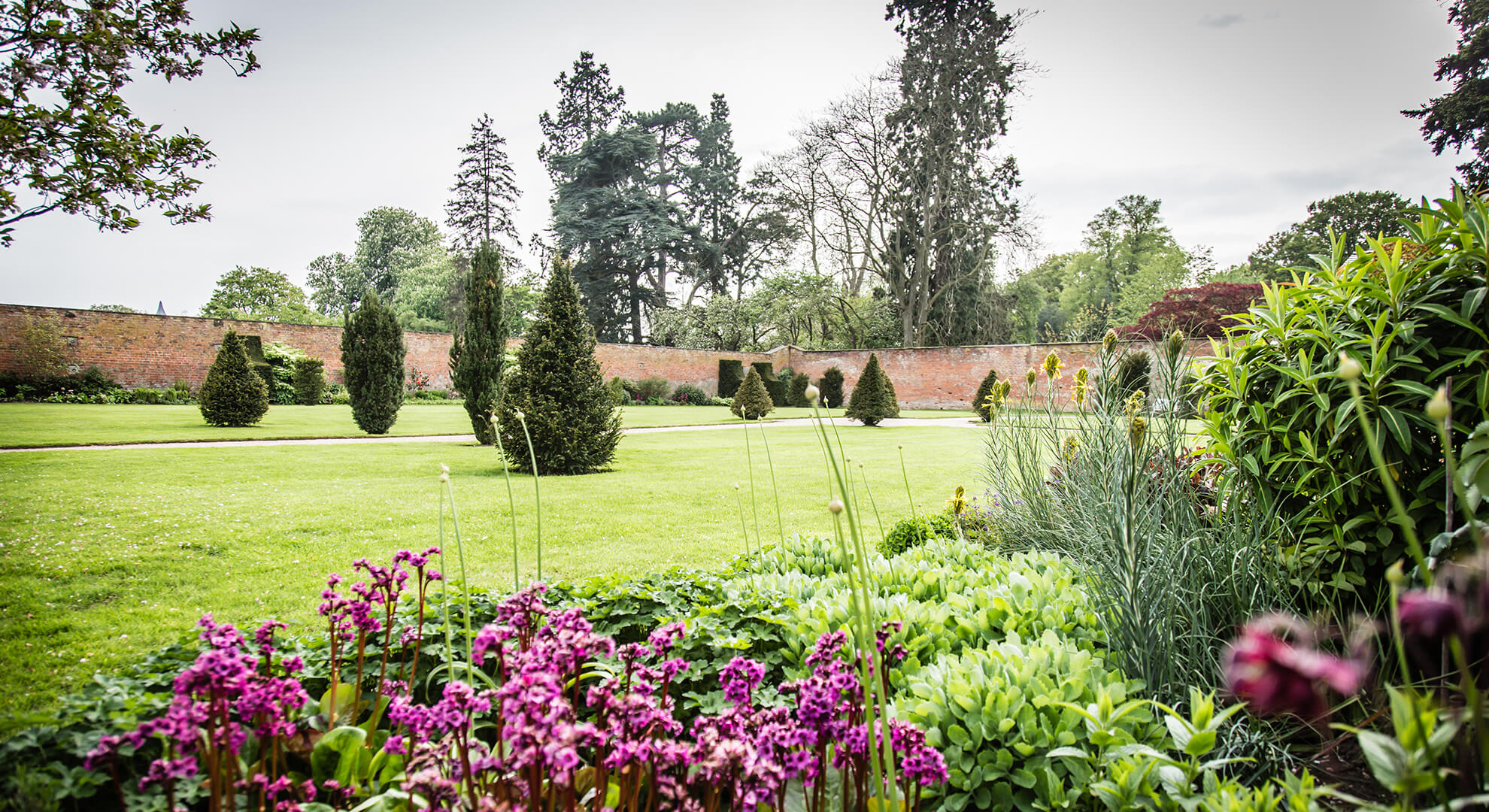
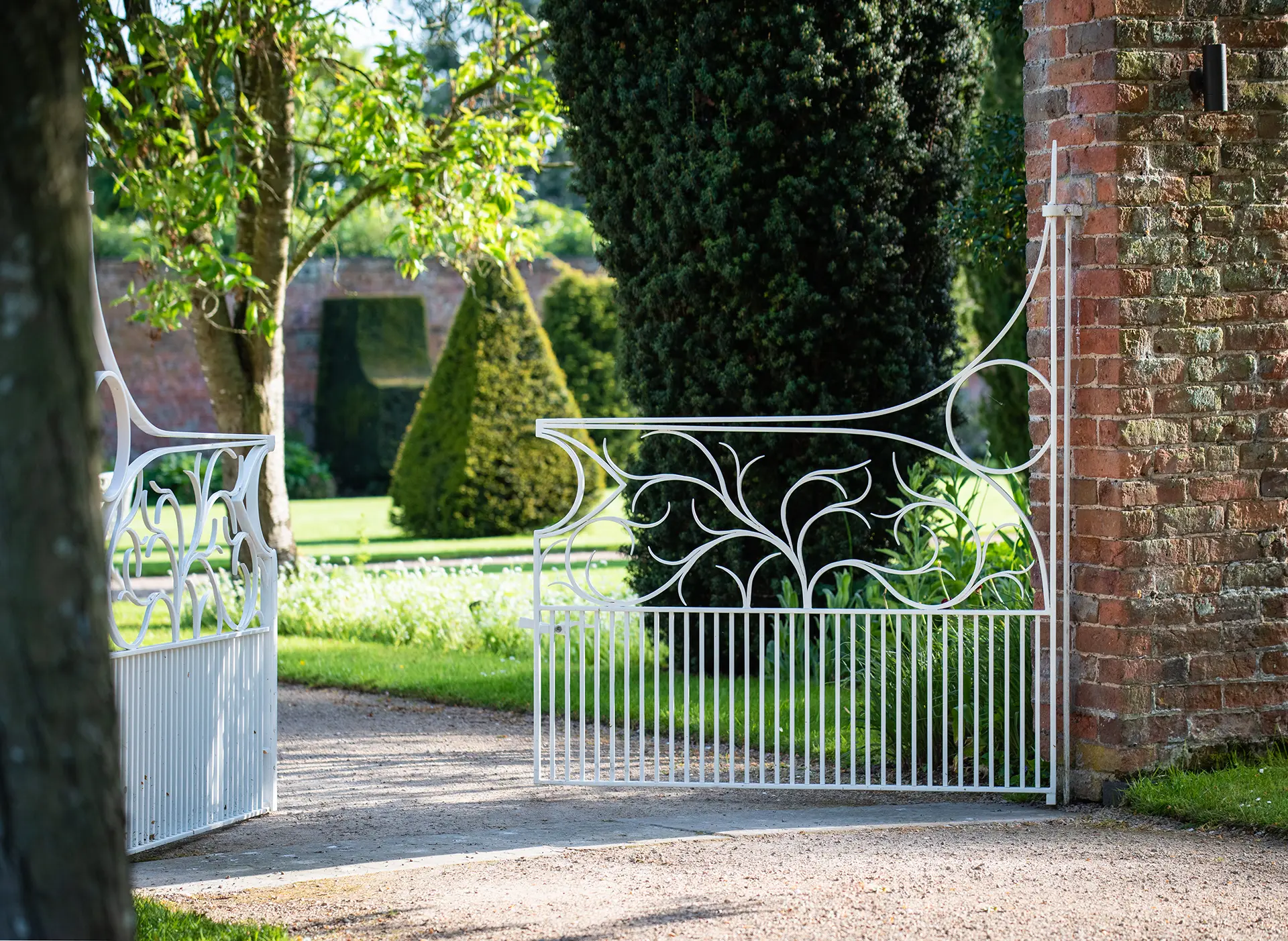
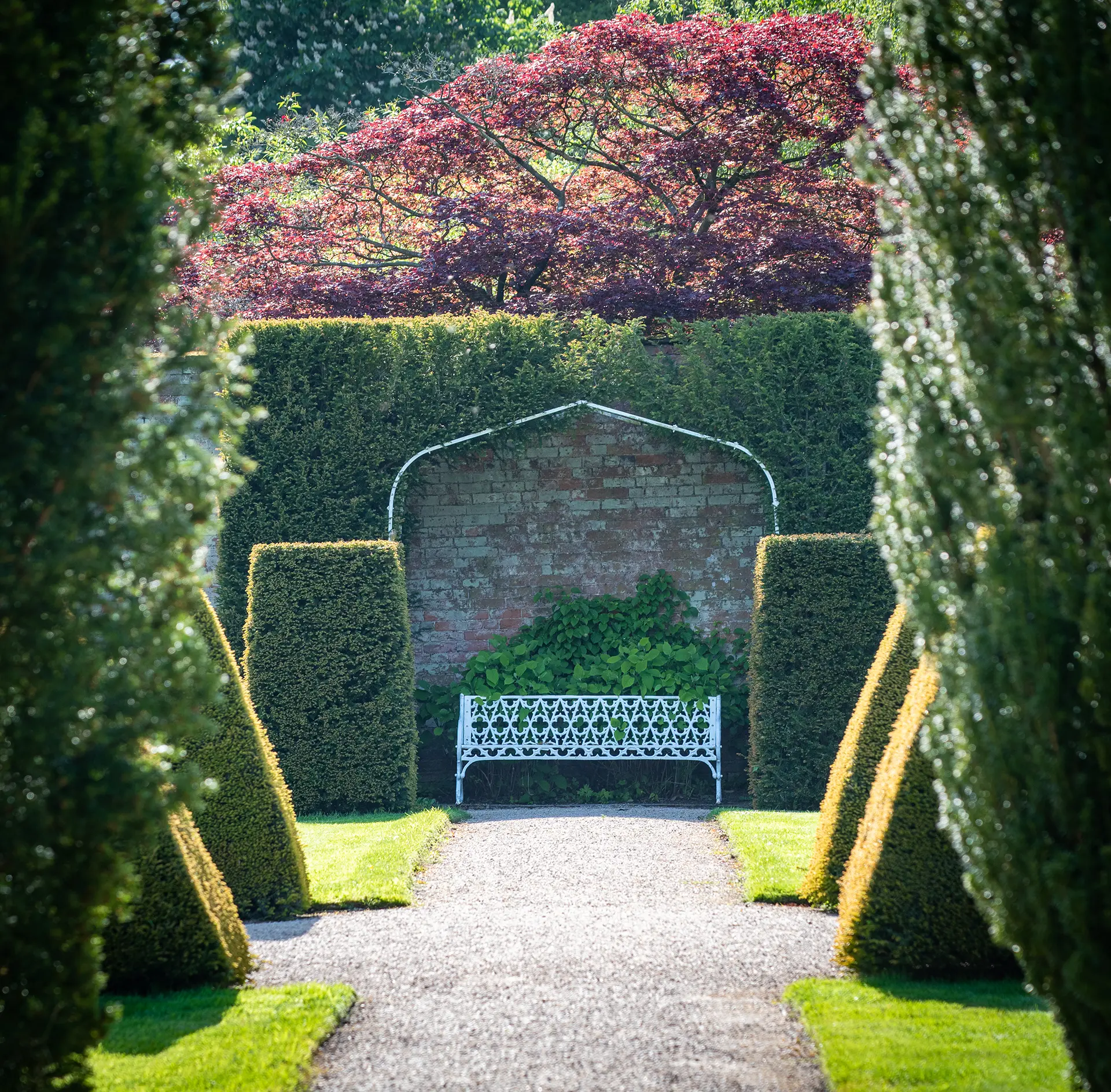
The Walled Gardens at Combermere Abbey are a remarkable testament to a way of life which almost completely disappeared between the 1st and 2nd World Wars. They comprise three large gardens, two rectangular and one semi-circular and a total size of five and a half acres.
Since 1992 these spaces have been lovingly restored by the current owners after several years of non-horticultural use and gradual decline into disrepair. During this time the majority of the original greenhouses were lost, but exciting new uses have been found and each garden has been approached completely differently and new life has been breathed back into them.
THE GEOMETRIC GARDEN
Designed by Peter Beckett, many of the features of the 1½ acre expanse are now approaching maturity. This was the first of the three gardens to be restored. The philosophy behind the design was to create a series of ‘rooms' (around the existing tennis court) each of a different geometric shape - Circle, Square and Triangle - and with a different emphasis in planting. The colour schemes chosen for each differ, offering variety in interest and use.
THE GLASSHOUSE
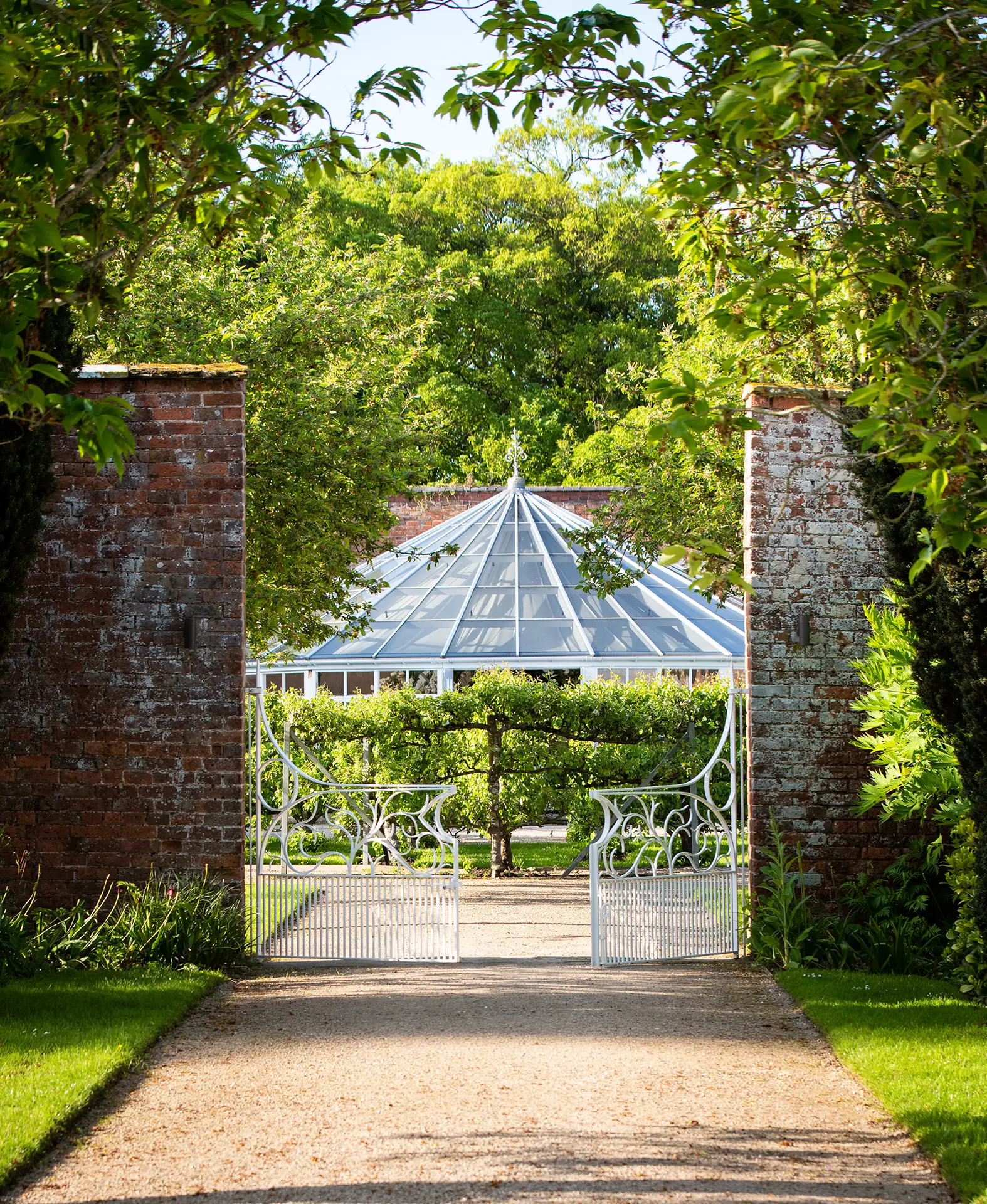
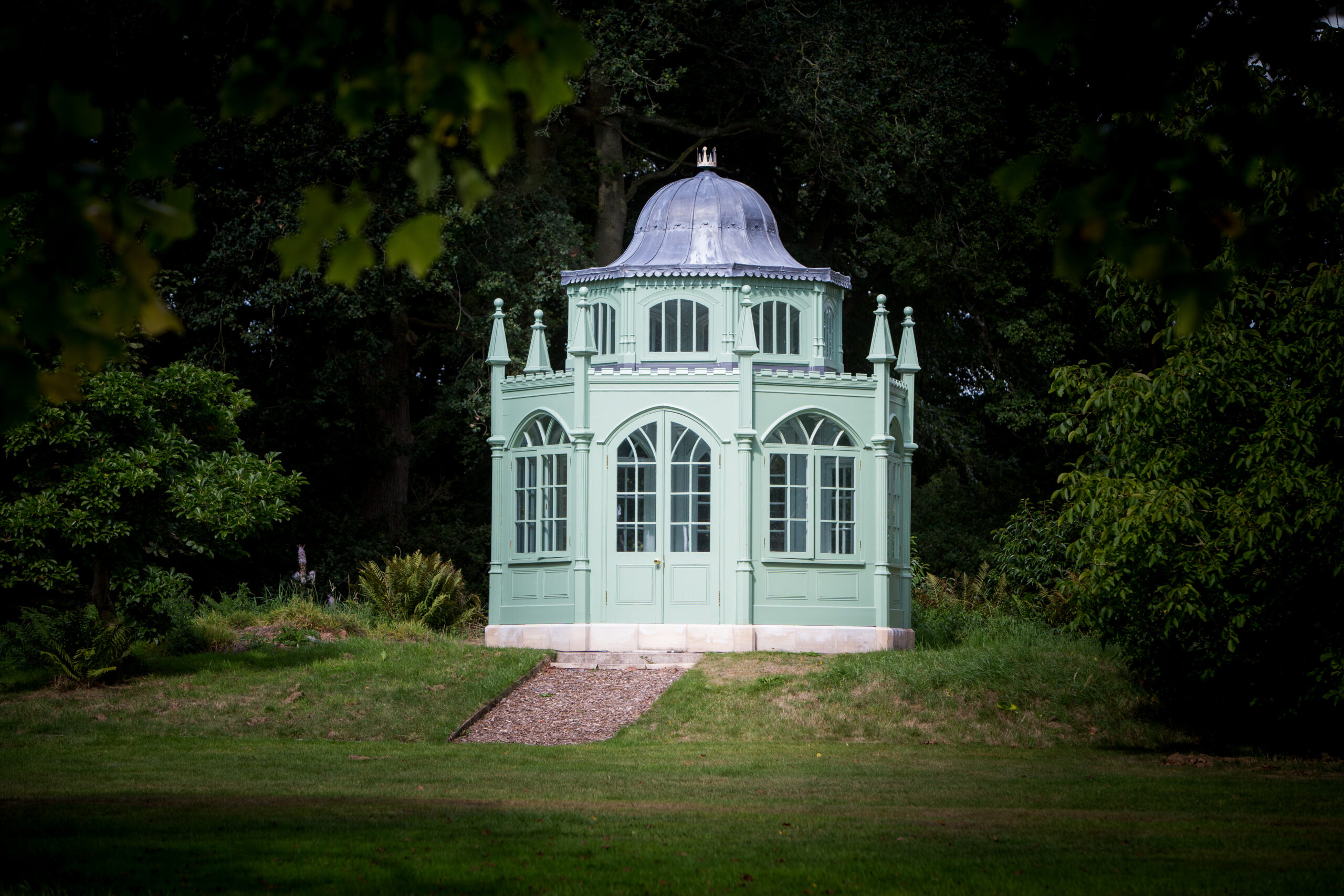
2007 saw the restoration and rebuilding of the once derelict Glasshouse at the top of the gardens. Its original walls and footprint have been preserved and incorporated into an elegant and exciting new space which can seat up to 100 people. The old garden buildings behind have found a second life as toilets and catering facilities which will enable us to use the gardens for a wide variety of activities throughout the year.
Further restoration includes the middle walled garden and the creation of new flower beds and restoration of some of the original central paths in the garden. This has made the gardens fully accessible to the new venue.
THE FRUIT TREE MAZE
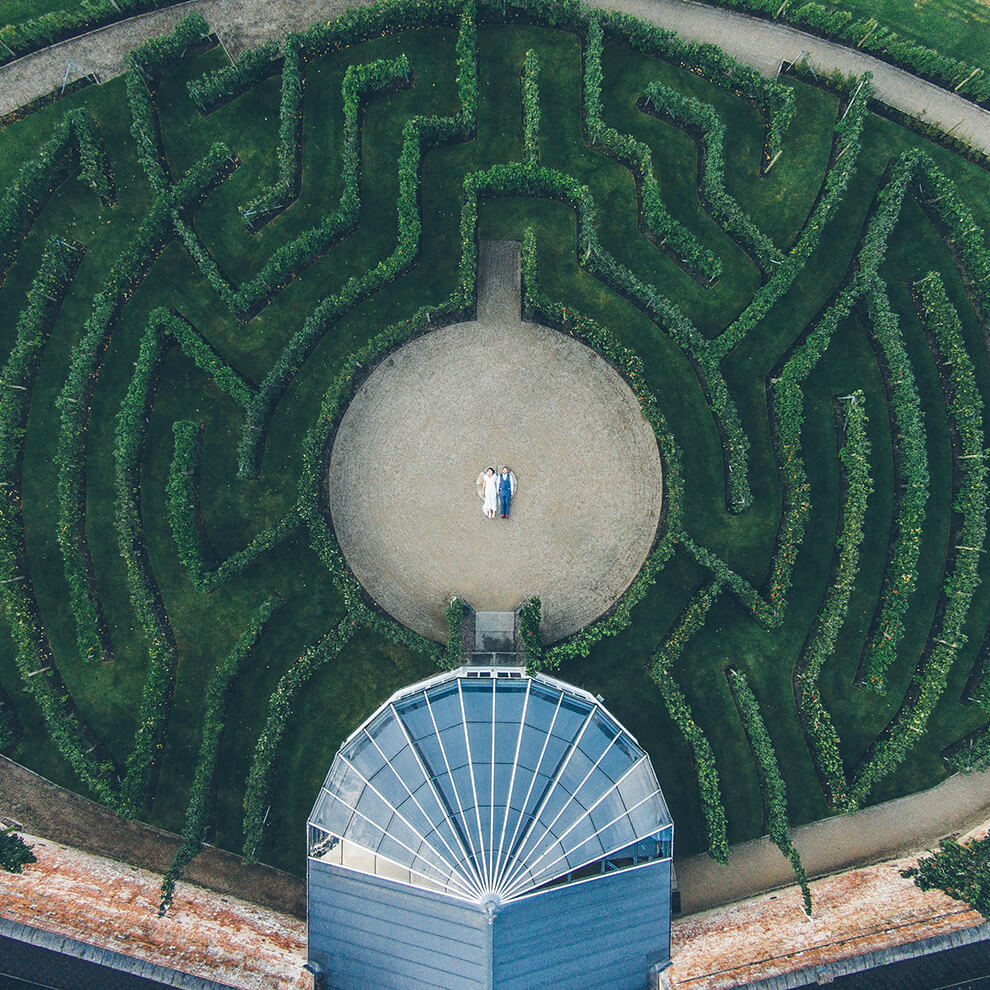
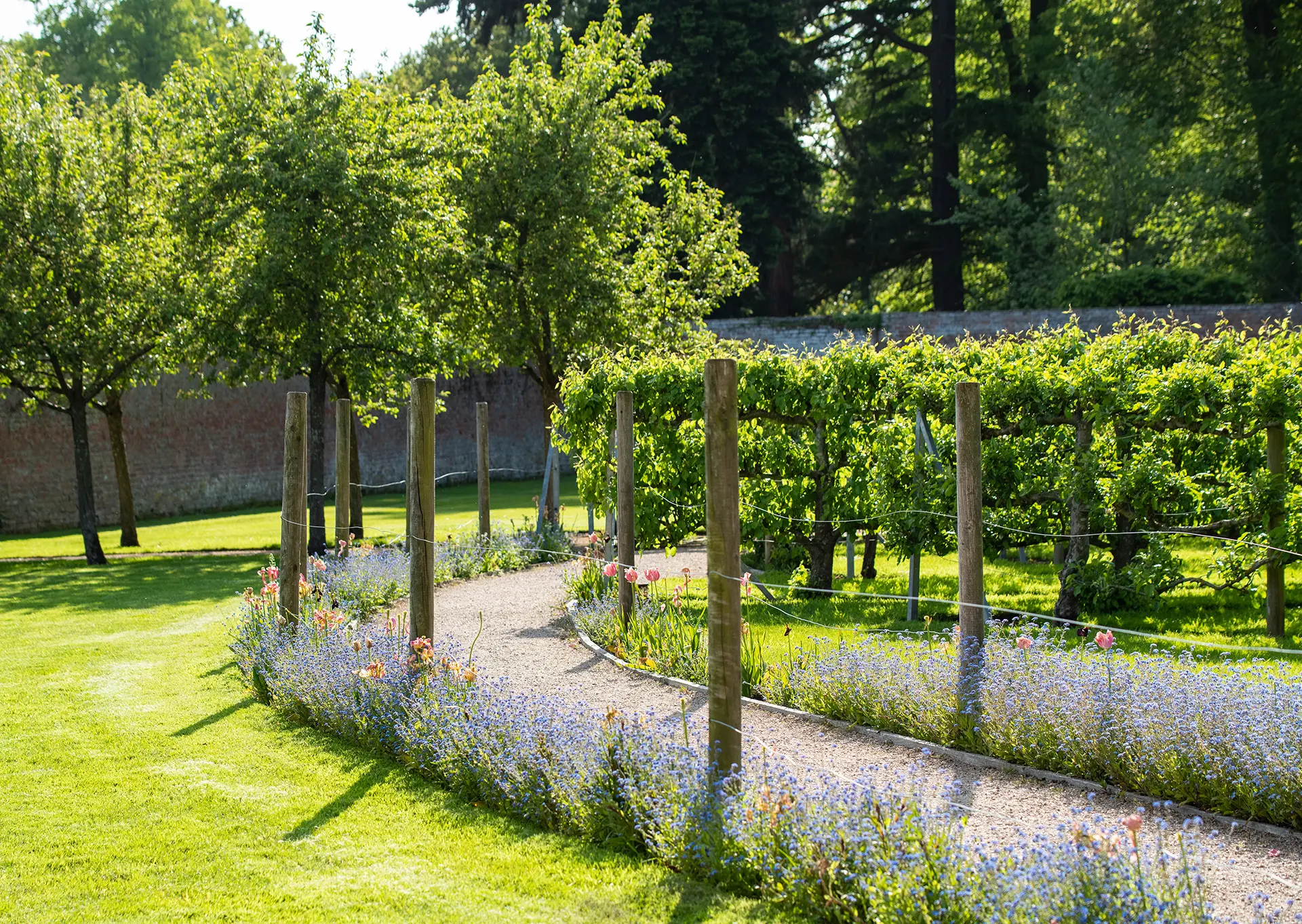
In 1992, a unique project was created for the third Walled Garden. A maze consisting of espaliered and cordoned fruit trees was designed by the late Randoll Coate, international designer of labyrinths and mazes in conjunction with Bert Davis, horticultural expert in fruit from Reaseheath College. This unusual partnership of octogenarians has resulted in the creation of the only known Fruit Tree Maze in the world. It surrounds the newly restored Glasshouse which has 180 degree views over the cordons of gooseberries and redcurrants and espaliers of apples and pears which form passages of more than half a mile into the centre and back again.
The annual crop of fruit - consisting of hundreds of pounds of redcurrants, crab apples, gooseberries, apples and pears is made into the ‘WALLED GARDEN COLLECTION'. This is a homemade selection of mouthwatering jams, jellies and chutneys, and fresh pressed fruit juices available for visitors to buy.
THE DESIGN OF THE MAZE
Using both symbology from the history of the Labyrinth as well as the Apple, it introduces both mythology and humour into its design. Its circular shape forms the Iris of the Eye (The Apple of the Eye !) and the four primary symbols are The Labrys (from which labyrinth is derived); The Tree of Life; The Minotaur's Head; and Icarus falling into the Sea.
The five concentric circles symbolize the five petal system of apple blossom and also evokes two hands in a gesture of fruit offering. The total number of Maze paths is 7 - that being the classical mythical number, and the total distance (without getting lost!) is half a mile.
It consists of 135 apple and pear trees, using ten varieties of apples and five of pears; 180 gooseberry bushes and 245 currant plants.
A HISTORICAL NOTE
Not a great deal is known about the building of the large five and a half acre walled gardens It is assumed that most of the bricks were made on the estate which once owned 22,000 acres of surrounding countryside! Early maps show that the two rectangular gardens were build first and the top semi-circular garden added at a later date.
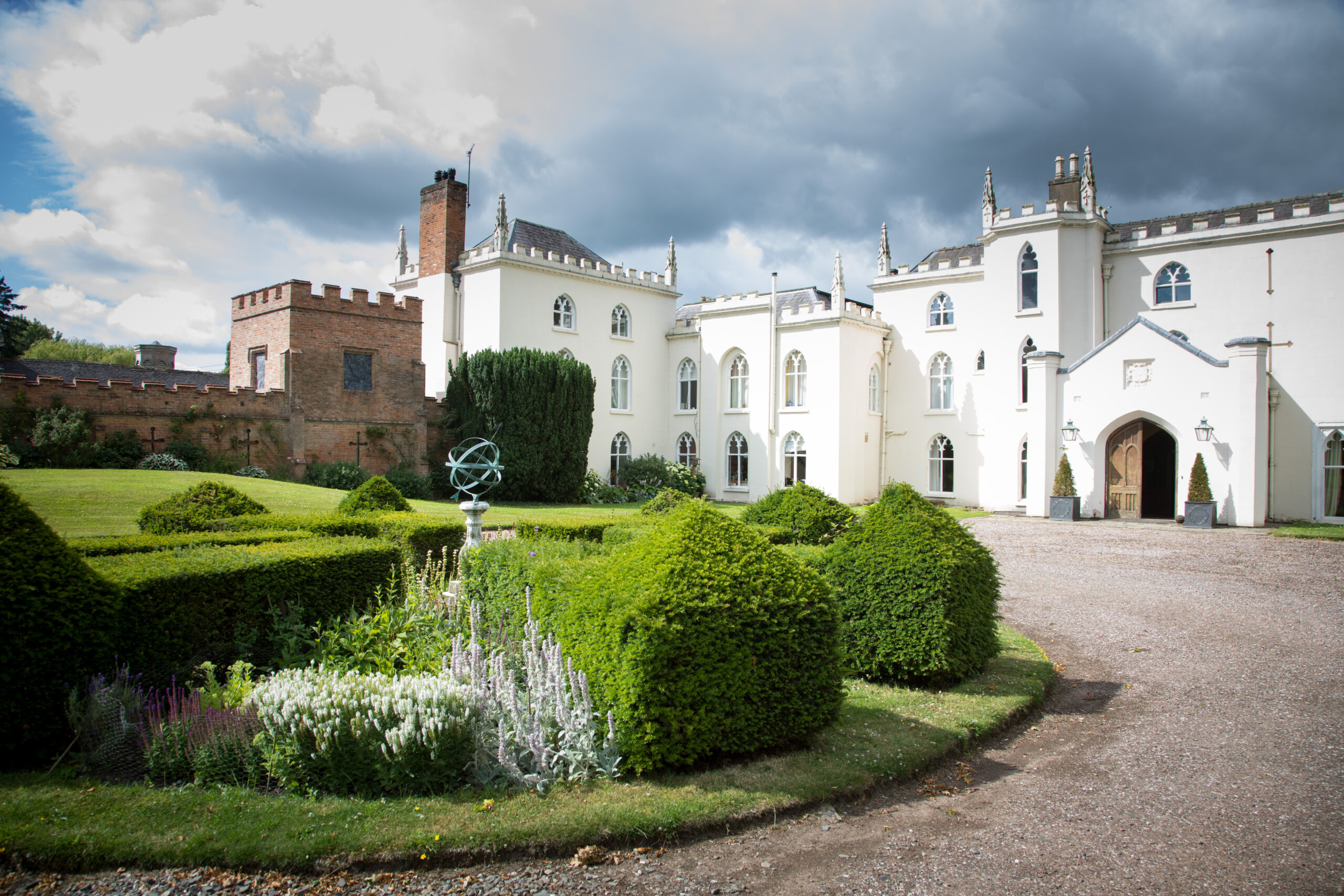
They would have provided employment for the large gardening staff during the late 18th and 19th centuries when Lord Combermere substantially altered and agrandised the estate, by remodelling the Abbey, creating the existing Stables and a new drive and entrance which is in use today.
After the Crossley family bought Combermere from the bankrupt 5th Viscount in 1919, there was still a staff of 19 gardeners and groundsmen, though that dwindled quickly during the wars, when all available men were sent to the front.
Following the death of Jack Huxley, the last of the original gardeners, in the 1970's, they were abandoned and a vegetable garden created closer to the main house. Sadly during the ensuing 20 years the original greenhouses were lost to an invading army of self seeded sycamore trees, and had to be pulled down. Only the central structure remained and it has recently been beautifully restored to become The Glasshouse, our fabulous licensed wedding venue.